
Striving for Perfection

Inspired by a post on social media, in this episode, David talks about the elusive concept of perfection. By always striving for things to be perfect, we place a great deal of pressure on our self, others and the world around us and bring about our own disappointment and frustration with life.
Guided Meditation – Viewing the Mind As Like the Sky
This is a guided meditation on viewing the mind as like the sky. Whenever we identify with and get carried away by our thoughts we lose awareness of the spacious clarity of our mind, within which our thoughts occur, and our perspective becomes small and constricted. When we can simply observe thoughts arising without getting involved, […]
The Keys to Happiness in Daily Life
In this episode, David talks about the keys to happiness in daily life. By taking the time to understand and cultivate the three pillars of genuine wellbeing identified by contemplatives for generations, we can simplify our daily practice and make progress every day towards a happy and meaningful life. Listen now on your favourite app… Apple […]
Saying No to Self-Criticism

In this episode, David talks about saying no to the inner self-critic. Self-criticism, low self-esteem and thoughts of being not good enough can be really debilitating and hold us back from achieving our dreams and highest aspirations. Talking from the perspective of Buddhist psychology, David talks about what leads to overly critical thoughts and beliefs and provides some ways of letting go of these thoughts and building our self-confidence.
Changing Negative Habits and Cultivating Positive Ones
In this episode, David addresses a question regarding changing habits – becoming aware of them, breaking damaging habits, and embedding new positive ones. Talking practically from his own experience, and using the analogy of a bus station and a road network, David talks about how habits are formed and suggests some helpful ways we can use conscious effort and self-awareness to overcome these negative habits and to cultivate positive ones.
Guided Meditation – Mindfulness of Feelings
This is a guided meditation on the second close application of mindfulness – mindfulness of feelings (Skt. vedana). The four close applications of mindfulness (Skt. smrityupasthana; Pali. satipatthana) are the bedrock of the Buddha’s teachings on vipashyana, and as the Buddha described them: the direct path to nirvana. In this guided practice we attend closely to the different types of feelings (pleasure, displeasure, and indifference) arising in relation to sensations from our five physical senses and we carefully pose questions and inspect the very nature of these feelings.
Healing Trauma Through Meditation and R.A.I.N. – In Conversation with Charlotte Adle
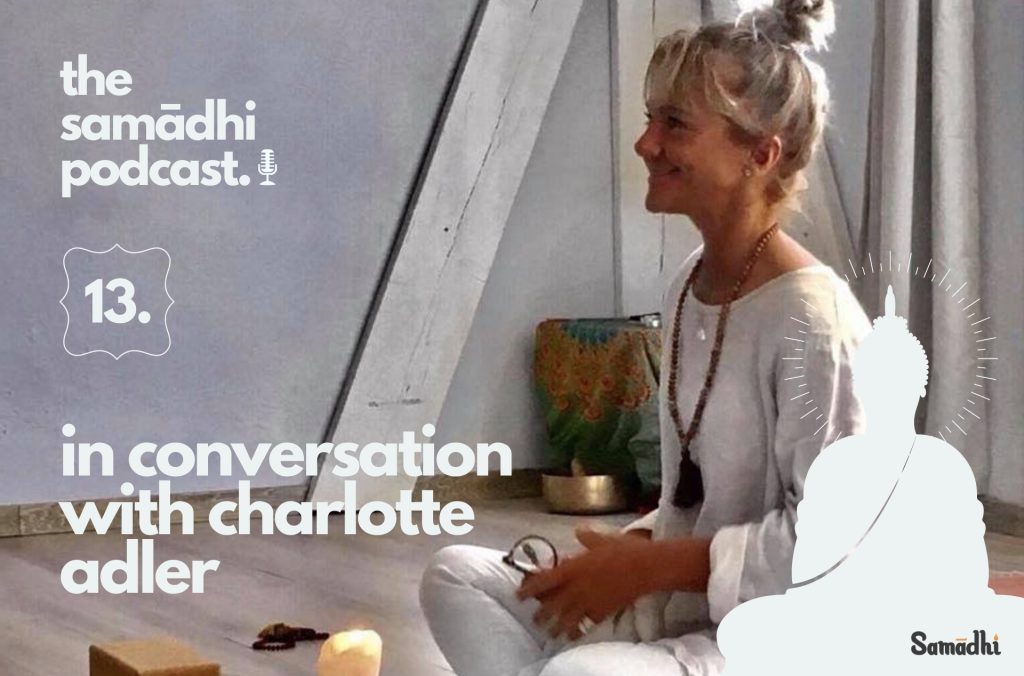
In this episode, we are joined by Charlotte Adler of Bodhicitta Lifeworks. Charlotte is a healer, therapeutic counsellor, and meditation guide and has spent the last 13 years or so helping women to deal with all aspects of recovery in the aftermath of addiction and trauma. Extensive studies in Buddhist Psychology plus time spent in Northern India practising both yoga and meditation, have led her to her current position, offering, with the greatest joy, accessible Dharma workshops and guided meditation to retreatants at all levels of study and practice. Charlotte was kind enough to share her thoughts and experience of meditation, Buddhism, healing trauma through meditation, and R.A.I.N.
Dealing with Frustration

In this episode, Dassetu explores a common emotion that many of us experience on a regular basis: frustration. Frustration comes from non-acceptance and our ‘grasping’ at our expectations. It comes from not wanting things to be a certain way and being unable to accept things the way they are. But, as we’ll see, frustration is not an inherent part of our mind and is something we can reduce and remove altogether. The Buddha offered a range of simple methods to calm ourselves and let go of our frustrations so that we’re not so irritated and angry throughout the day, and to help us transform our minds completely.
Guided Meditation on Maitrī (Loving-Kindness)
This is a guided meditation on Loving-Kindness (maitrī in Sanskrit). Loving Kindness is the first of the Four Immeasurables, a rich compilation of practices that open the heart, counter the distortions in our relationships with ourselves and deepens our relationship with others. The essential nature of loving-kindness is a yearning that the person we are directing our attention to be well and happy. The object of one’s loving-kindness may be oneself, another human being, an animal, or any other sentient being. May everyone be free of enmity. May everyone be free of affliction. May everyone be free of anxiety. May everyone be well and happy.
The Key to Happy, Healthy & Loving Relationships

In this episode, Dassetu talks about love and attachment, and the key to happy, healthy and loving relationships from a Buddhist perspective. For a lot of us, if someone was to ask us “what would make your relationship with your partner better?” our answer would be something that our partner should do differently. It may even be a whole list that we have prepared. But as we venture on the path of meditation and self-inquiry, we realise that, as with everything, our relationships are subjective and the happiness, joy and love we seek must come from within. By bringing love and joy to the world and avoiding the extremes of aversion and craving, we can have happy, healthy and loving relationships with everyone we meet.

